
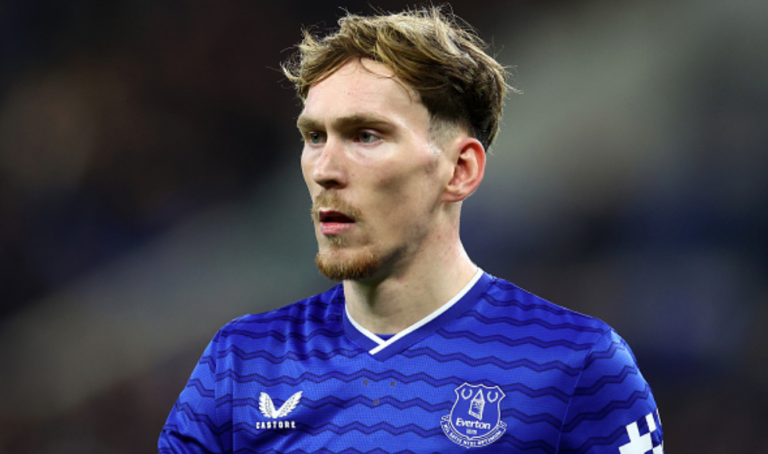
Everton suffered back-to-back home defeats against Manchester United.
Benjamin Sesko settled matters midway through the second half as he drilled home after being teed up by Matheus Cunha from a counter attack.
The loss sees David Moyes’ side remain ninth in the Premier League table, eight points off a potential European qualification position.
Here were the key talking points from Hill Dickinson Stadium:
Midweek malaise rumbles on
Evertonians must feel like they are living through Groundhog Day.
Another defeat at Hill Dickinson Stadium saw home supporters left frustrated again by their team’s lack of cutting edge in the final third despite signs of improvement.
But as David Moyes’ side were cheered off for their endeavour, it was clear those frustrations go beyond results and performances from those in the royal blue shirt.
This was the third Monday night fixture hosted at Bramley-Moore Dock since Everton made the move to their impressive new surroundings last summer.
To put that into context, it is the same number of times they have been afforded the privilege of a home fixture of any distinction in its traditional Saturday 3pm slot.
For contrast, Goodison Park’s final season saw eight Premier League games and nine overall remain in their intended scheduling despite its emotional appeal.
The Blues’ last ‘normal’ match by the banks of the Mersey nearly three whole months ago coincided with their most recent win here against a lowly Nottingham Forest.
With the Merseyside derby and a title-chasing Manchester City still to head to Hill Dickinson Stadium, the potential for further upheaval appears inevitable.
Fans have spent most of this season struggling to get to become acquainted with their new home and the lack of match day continuity has only compounded matters.
Barry risks more harm than good
Such is Thierno Barry’s desperation to make himself available to Everton at every opportunity that he has resorted to acts of sacrifice already this season.
The former France under-21 international suffered a shoulder dislocation in November’s win over Fulham and popped it back in purely just to stay on the pitch.
Yet Barry’s commitment to the cause risks doing more harm than good.
Everton’s No.11 revealed his extent of playing through the pain after coming off worse in a first-half collision with Kobbie Mainoo that required prolonged treatment.
On the touchline, his right shoulder was applied with several layers of additional strapping before he was allowed to return to the field against the Red Devils.
Barry and Everton’s medical team clearly feel this ‘make do and mend’ approach is workable and ensures the first-choice attacking outlet’s ever-present status.
For now it is working, but patching up this ongoing issue cannot go on forever.
Has Moyes lost his way on set pieces?
During his first spell as Everton manager, Moyes had a penchant for packing the opposition penalty area with bodies; ready to pounce on inswinging corners.
More often than not, the likes of Duncan Ferguson and Marouane Fellaini would be beneficiaries of those deliveries but something appears to be lost second time out.
At a time when Premier League has leaned into the Scot’s previous set-piece methodology, however, he appears to have shied away from that approach.
Everton still possess players capable of getting their head on a floated delivery with Jarrad Branthwaite, James Tarkowski and Michael Keane all stationed in the box.
Instead, Senne Lammens found himself crowded on the goal line for most of the 10 corners which were all dealt comfortably by the United stopper and his backline.
Moyes admitted post-match that his side were not as organised off the ball as their visitors, but that only told half the story of why Everton fell short in the attacking third.
But the problems were entirely of his own making by opting for an unorthodox approach to what was once a tried and tested tactic.