
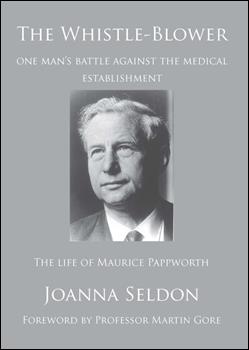
One of Liverpool’s most pioneering Doctors, Maurice Pappworth, is to be celebrated in a new book on his life.
The Whistle-Blower by Joanna Seldon is both a celebration of his life and will also mark the 50th anniversary of the publication of his whistleblowing 1967 book Human Guinea Pigs which changed the face of British medical ethics forever, by unearthed shocking practices within hospitals including experimenting on humans without their consent.
Pappworth was born in 1910 on Brownlow Hill, grew up and went to school in Birkenhead, won a scholarship to Liverpool University to study Medicine. Despite being one of the top students in his class, he suffered from anti-Semitic discrimination and was denied the opportunity to become a consultant surgeon. Instead he set up his own private practice and tutored medical students privately, becoming known as one of the best medical teachers in the country. Despite ethical principles set up by the Nuremburg code, Pappworth uncovered increasingly invasive procedures taking place in hospitals on vulnerable groups including babies, pregnant women and cancer patients, as well as patients going for routine operations through the NHS.
Maurice Pappworth, was born in Liverpool in 1910 on Brownlow Hill, to Jewish Orthodox parents who had emigrated from Poland. As a young child, Maurice moved with his eight siblings and parents to Birkenhead where his father was a tailor and mother a housewife. Maurice grew up in Birkenhead and attended the Birkenhead Institute and was awarded a scholarship to Liverpool University to study Medicine. He graduated from Liverpool University’s medical school in 1932 and began work in several Liverpool hospitals in junior roles. Before the Second World War, Pappworth applied for a medical consultant role only to suffer from anti-Semitic discrimination, being told that “no Jew could ever be a gentleman” when he applied for a post in 1939; that position eventually went to a student whom he had coached for the MRCP exam.
2017 marks the 50th anniversary of Maurice Pappworth’s seminal work Human Guinea Pigs (1967), the controversial book which unearthed shocking practices within the medical establishment including experimentation on humans. Despite ethical principles set up by the Nuremburg code, Pappworth uncovered increasingly invasive procedures on vulnerable groups including babies, pregnant women and cancer patients up until the 1970’s in Britain, the US and Canada. From deliberately inducing heart stoppage to achieve better X-Rays and oxygen deprivation on infants to the deliberate blistering of children’s abdomens, Pappworth named and shamed those that placed the pursuit of science above ethical practice and put lives at risk.
The Whistle-Blower is the first biography exploring the life of Pappworth, a physician who reshaped the medical establishment and helped change the face of medical ethics with Human Guinea Pigs. Brilliant, Jewish, already an outsider, Maurice Pappworth was recognised as the best medical teacher of his generation. Unafraid to speak his mind, Pappworth’s exposés were frequently covered in the press and eventually led to stricter codes of practise for human experimentation. From the Rights of Patients Bill to the establishment of ethical committees in the UK, The Whistle-Blower examines the impact Maurice Pappworth had on the medical establishment.
Maurice Pappworth’s daughter, the late Joanna Seldon, reassesses the importance of Human Guinea Pigs as a major milestone in the development of modern research ethics. The Whistle-Blower calls for a re-evaluation of the pioneering medical ethicist who compromised his own career for the protection of the patient.