
It all began in 1883 when the Home Nations Championship was born. England, Ireland, Scotland and Wales would compete against one another for the Championship Trophy. In 1910, France joined to create the Five Nations, then Italy in 2000 to create the Six Nations Championship as we know it today.
But with global competition becoming more popular with the advent of the Rugby World Cup in 1987, other nations realised they lacked chances to compete on an international level. The Rugby Championship’s inaugural season was in 1996, only nine years after the first World Cup. Although New Zealand, Australia and South Africa had managed to secure the Web Ellis Trophy in the first three competitions, they realised their northern hemisphere counterparts were edging closer to success. So the following year, the southern hemisphere competition was announced.
The Tri Nations series
The Bledisloe Cup became the prize of the annual competition including South Africa, New Zealand and Australia. Each nation had already won a World Cup title, so it seemed fitting that the sides compete against one another on a regular basis to improve their quality.
Although other southern hemisphere nations had rugby teams, none were of the same level as the Tri Nations so were not invited to join the competition. Until Argentina proved their worth. In 2007 the South American nation reached third place at the World Cup, which ultimately paved the way for their invitation in 2009.
The Rugby Championship
The tournament rebranded as the Rugby Championship and in 2012, Argentina would join their first competition. Although they have remained the bogey team who are yet to win a title, the competition is the perfect opportunity to strengthen the squad in preparation for other international tournaments.
The four nations are the highest ranked in the southern hemisphere, but there have been rumours for further expansion. Since the Rugby World Cup there have been pressures for Japan and Fiji to join the competition, but nothing has been confirmed yet.
Looking back
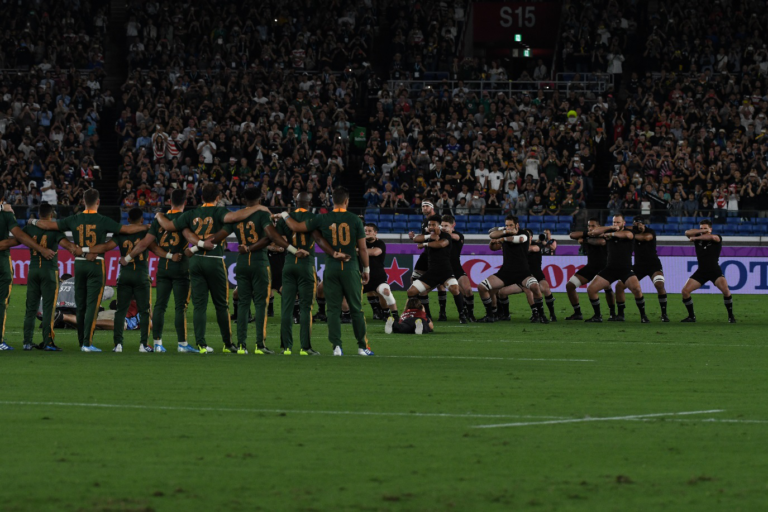
Since 1996, the All Blacks have won the competition 16 times, failing to secure the trophy only three times. New Zealand have only finished in last place of the competition twice, once in 1998 and the other in 2004. Of all their games in the competition, the All Blacks have won 86 and lost 26 with two games ending in a draw.
South Africa are sadly the competition’s wooden spoon nation, having won the utensil 11 times but since Argentina arrived in 2012, they have only claimed it once. New Zealand are the only nation to have a positive point differential. The Springboks have a total of -277, the Wallabies with -326 and Argentina with -610, even though their history is much shorter than the other nations.
Looking forward
If Japan and Fiji were to enter the championship, we could soon see a similar replica of our beloved European competition. The question is, what sort of affect would this have on the teams at the World Cup?
The more international experience these nations gain away from the world stage, the more opportunities they have to develop. England are favourites in the Six Nations 2020 betting after finishing runners up in Japan, but are their chances on the world stage about to dwindle? Will the success of an expanded southern hemisphere tournament hinder the chances for a European team to claim the Web Ellis Trophy?