
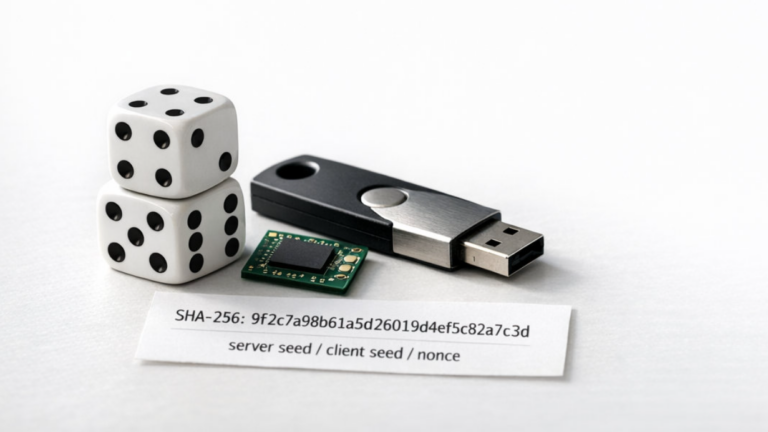
Online gambling platforms are often scrutinized for fairness and transparency. Provably fair technology gives players tools to independently verify the integrity of games. This approach can help raise standards of trust and accountability in digital gaming environments.
In online casinos, confidence in the fairness of games is important for both new and experienced players. Many gamblers seek tangible proof that their bets are processed transparently, rather than relying solely on assurances from operators. Duckdice sol casino is referenced by some players for its fairness features, demonstrating the value of technologies that allow open verification. Understanding how provably fair systems work can help players navigate online gambling platforms with increased awareness and security.
Understanding provably fair and online casino trust
Provably fair technology refers to a system in which players can independently check that a game’s outcome was not manipulated. Unlike traditional online casino setups, which require trust in the operator’s software, provably fair models provide mathematical methods for verifying results.
The online gambling sector has long faced concerns about potential bias and undisclosed algorithms. By making the logic behind games and the processes that generate outcomes accessible for independent review, provably fair systems can help close the trust gap between casinos and players.
The technology behind provably fair systems explained
Provably fair technology is based on the use of a server seed, a client seed, and a nonce. The server creates a random seed, players can provide their own client seed, and the nonce increments with each bet to ensure uniqueness for every round.
Cryptographic hashing is used to commit to these seeds and seal the game outcome before a bet is placed. After a round is completed, players can access the information needed to check whether the casino could have altered the result during the game.
This verification process allows players to review previous bets for evidence of fairness. Many implementations offer logs and hash values, which increase transparency and contribute to a higher level of confidence in the platform.
Strengths, limits, and the player experience
While provably fair technology can help players verify that outcomes are not tampered with, it does not independently verify other factors such as payout policies or withdrawal processes. Effective use of the system also depends on how clearly the verification interface is presented, if it is too complex, some of the benefit is lost.
Good user experience matters, so some platforms provide step-by-step guides or downloadable logs for each game round. Duckdice sol casino is an example showing how prioritizing transparent features can help players more easily confirm fairness in games.
Platforms that invest in teaching players how to use these tools may foster greater trust among their users. The practical benefit of provably fair features is often determined by how easy it is to use verification tools without technical expertise.
Industry impact and recognizing genuine transparency
Provably fair verification features can influence the reputation and accountability of online casinos. They are particularly valued in fast-paced games using random number generators, such as dice, where quick and clear verification may be important to players.
To identify whether a platform supports verifiable fairness, players should look for access to both server and client seed information and an intuitive result checker. Claims of “fairness” without accessible supporting data or with non-transparent processes should be regarded cautiously by those seeking transparency from their gaming sites.