
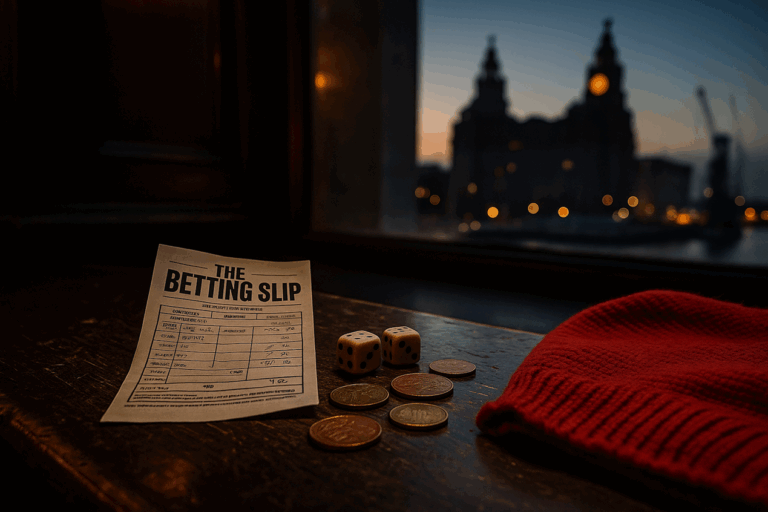
Liverpool grew on tides of trade and fortune, as a city where opportunity and risk met on the docks as naturally as the Mersey met the sea.
It’s no wonder, then, that gambling here was never imported as a curiosity; it was absorbed into working-class life, sharpened by sailors bringing fresh games ashore. Dice rolled in backrooms, cards slapped on pub tables, and wagers passed from hand to hand in the shadows of warehouses.
Utterly in tune with the way the city forged its bond with chance ages ago through the eagerness to succeed by risk and reward, relying in that same rush players today try their changes in new casino sites with bonuses to impress and games to explore in slick mobile venues through tech that keeps the game within reach. That continuity shows how chance has always had a home here, from dockside taverns to digital screens.
Cards and Dice by the Docks
Seafarers who tied their ships along the Mersey left more than goods behind. Liverpool, one of the busiest ports in Britain by the late 19th century, drew crews from America, Europe, and Asia, and with them came decks of cards worn soft by Atlantic crossings and dice chipped by use in foreign taverns.
Games that began as diversions on long voyages spilled into pubs along the docks, and dockworkers who risked their wages on rolls and hands carried those customs back into the city. The port’s global reach meant Liverpool never played in isolation. Each ship brought rules, tricks, and wagers unknown in inland towns, giving the city’s gambling culture a restless, worldly edge. While Parisian salons still treated roulette as a glittering novelty, betting was at the core of Liverpool’s daily life, defined by trade routes that made chance feel as natural as the tide.
Pools, Horses, and Street Bets
With time, betting flooded the city in the most inventive and lucrative ways. If you were to ask a modern fan about sports betting in Liverpool, their first association will probably be the city’s football clubs. This almost intimate connection between the city, football, and betting has deep historical roots, because sports betting in Liverpool as we know it today started with the Littlewoods pools, which changed both the game and the city’s gambling story forever.
Founded in 1923, the scheme began with three partners, then employees of the Commercial Cable Company, staking £50 each – about £2,000 in today’s money – to print betting coupons and circulate them across Liverpool, reviving an idea they had first heard had failed in Birmingham. In February 1924, 4,000 of those slips went into circulation and only 35 of them returned unused – a modest start that would snowball into a national phenomenon.
Racing already had a long-standing army of followers at the time. Bookmakers became part of neighbourhood scenery, and street bets, often shouted from corners, kept money and hope in constant motion.
Imagining this scenery this makes it clear why the word “pool” clung to Liverpool so tightly, as if the city stamped its claim on betting centuries before these mighty strategies were written into coupons and carried into every street.
Bingo Halls and Clubs of the People
The next phase of the development started in the late 50s and got officially launched in 1960 when the Betting and Gaming Act was adopted. At that point, bingo halls mushroomed across Britain, and Liverpool embraced them with energy. Nights out in packed halls were not about high stakes but about community, about neighbours sharing laughs while numbers carried the promise of sudden fortune. Working men’s clubs, too, set aside tables for games that mixed chance with camaraderie.
Strangely enough, this tradition has not vanished but changed form. Throughout the kingdom, bingo halls now attract young players, with 2023 figures showing the country’s biggest operator welcoming about 200,000 newcomers in a single year, nearly half of them under 35 years of age. This change marks how the game once seen as older generations’ territory has now opened its floors to youth, looking for diversion and potential to earn, much like their ancestors back on the docks.
Music and Gambling Hand by Hand
When Liverpool’s nightlife hit global heights in the 1960s, with the Cavern Club sending local sound into world history, gambling was not far behind. Casino venues appeared alongside music halls, offering roulette and blackjack to the same crowds who chased records and dance floors.
Chance became part of the evening’s tempo. Music gave the city fame, but the roll of the wheel and the turn of a card secured gambling a place in Liverpool’s entertainment circuit – not hidden, but woven into its social nights.
Risk as Identity in The Digital Era
And then came technology. Its digital turn did not bypass Liverpool. Where once wagers circled in pubs or echoed in cavernous bingo halls, now they appear on screens carried in pockets. What looks modern is only a new vessel for instincts the city has carried all along.
From dockside dice and inked coupons to the cadence of bingo calls, the settings changed but the inclination stayed. Liverpool backed a hunch with wages it could spare, met losses with humour, wins with laughter, and always returned for the next roll, the next line, the next spin. The phone simply widens the reach, not the spirit; the readiness to risk, the resilience after a fall, and the refusal to fold, all remain etched into the city’s way of playing, as permanent as the tide that first brought the games to its shore.