
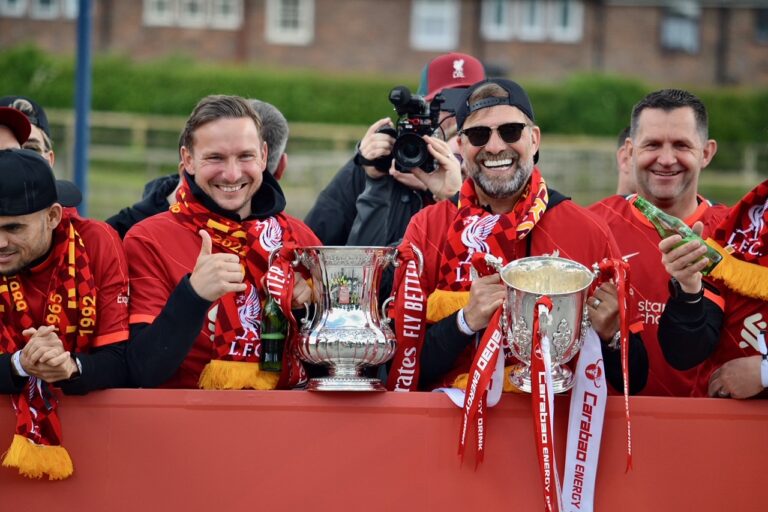
Jurgen Klopp gave a four-minute interview to BT Sport following his side’s season opener in the Premier League against Fulham where the Reds could only muster a 2-2 draw. As usual, Klopp was animated, insightful, and forthright, but it was his passing comment about the Craven Cottage pitch being dry that was going to be the only soundbite that was used in his conversation with presenter Des Kelly.
It has, understandably, caused a stir with the focus now back on Klopp’s knack for blaming external factors for his team’s poor performance. All things considered, it should be said the German was actually in surprisingly good spirits during his post-match interview which he deserves credit for when you consider that Liverpool’s odds to win the Premier League had risen to 7/2 by the full-time whistle. In short, it had been a nightmare start for the Reds but Klopp’s demeanour didn’t reflect as much.
😡 “Klopp is making excuses, he loves an excuse and he gets away with it a lot!”
🤦♂️ “Fulham’s pitch is immaculate! The grass is perfect. Come on, It’s ridiculous!”@MrJamieOHara1 slams #LFC’s Jurgen Klopp blaming #FFC’s football pitch 🔥
🤝 With our friends @ArnoldClark #Ad pic.twitter.com/wETAoI9HrB
— talkSPORT (@talkSPORT) August 8, 2022
With this in mind, you would have to admit that on this occasion, Klopp’s comments have been blown out of proportion. Of course, you have to consider that this may have been the German’s intention as it would ultimately take the spotlight off his team’s lethargic display on the banks of the River Thames. But that doesn’t take away from the fact that irrespective of Klopp’s desire to shield his team from too much scrutiny, he is now in danger of being remembered as a man who makes excuses, and not the tactical genius that he quite clearly is.
Essentially, Klopp isn’t being hard done by when you consider that on the whole, the German has come out with a string of unsubstantiated excuses over the course of his time in the Premier League. Indeed, they range from the wind denying his team a win to snow deciding the outcome of a 1-1 draw with Leicester City in January 2019.
Perhaps his most memorable reason for not winning came in late November 2020 after a draw with Brighton at the Amex Stadium, when Klopp congratulated BT Sport for injuring his players. The Liverpool manager was referring to the TV schedule that the broadcaster had put together and used James Milner’s hamstring injury sustained against the Seagulls as a way of proving that BT Sport were conspiring against the club.
A fascinating interview between Jurgen Klopp and @TheDesKelly discussing Liverpool’s draw with Brighton, the Reds’ injuries and fixture schedule. pic.twitter.com/s0BhahlUsP
— Football on BT Sport (@btsportfootball) November 28, 2020
On that occasion, the frustration of a stalemate that cost Liverpool dearly in the title race was the driving force behind Klopp’s post-match reflections and to a large degree, you can understand why the German would have been feeling the heat.
The problem for Klopp, however, is that these statements tend to be remembered and marked against him, as opposed to the situations from which they arose. Put another way, there was a genuine case to be made against the congestion of the fixture list and player welfare on that chilly late autumn day in 2020 but Klopp’s delivery undermined the legitimacy of the argument.
In conclusion, we may never know if Klopp is intentionally choosing to say headline-grabbing things following a poor result purely for the benefit of his players, but the inescapable reality is that he now has a reputation for doing so. Indeed, the German has built a remarkable legacy at Anfield and will forever be a Premier League great, but regrettably, not everyone will remember him that way.