
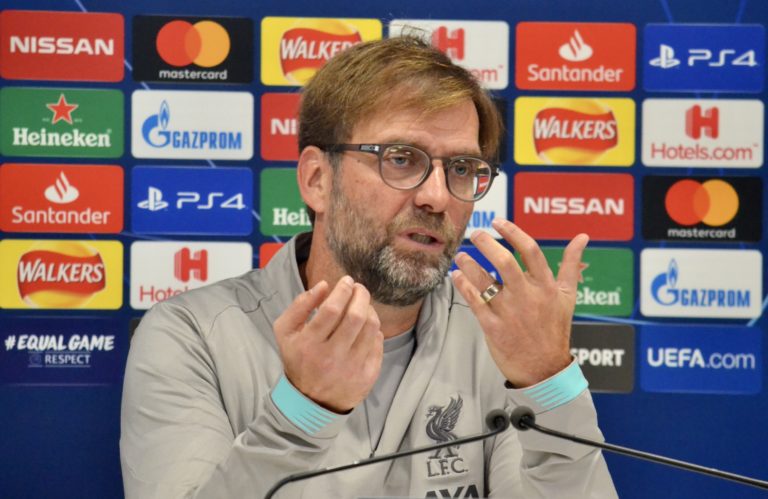
When Jürgen Klopp replaced Brendan Rodgers as Liverpool manager in October 2015, he entered into a three-year contract with a proud club whose standards were slipping. After finishing second in the Premier League in 2013/14, the Reds dropped to sixth the following season, and found themselves in 10th place eight games into the 2015/16 season. In the four years since, he has transformed the Merseyside outfit into a powerhouse.
Now a dominant force atop the Premier League standings, Liverpool took out its first Champions League in 14 years earlier this year, and will be looking to add to their silverware with a Premier League title for which they are widely favoured in a few months’ time – which you’ll know if you understand how to bet on football. The architect of such a drastic turnaround in fortunes, we take a look at five of the ways in which Klopp has transformed Liverpool.
Making Anfield a Fortress Again
When Klopp arrived in late 2015, teams visited Anfield with a good chance of escaping with at least a point, if not three. The new coach worked quickly to change that. Klopp acknowledged that while the atmosphere in the stadium was good, his players weren’t enjoying it – how things have changed from then to now.
The year before the German arrived at Liverpool, the team won just 10 of their 19 Premier League games at Anfield and lost four, and they started off the 2015/16 season in a similar fashion with just two wins from five home games. Indeed, a similar trend continued when Klopp was first in charge, and many of the finest moments from early in his tenure came away from home. Gradually, however, he turned the tide. Liverpool lost just two League games at Anfield in 2016/17, and since then they haven’t lost another League home game.
In the past two and a half Premier League seasons they have won 40 games, drawn ten and lost precisely zero at home. The atmosphere is better than good, and it is a thoroughly intimidating place to play. It’s safe to say Anfield is now a fortress once again.
Bringing Back the Joy
One of the first things Klopp noted about Liverpool was that the players weren’t enjoying themselves. Over his four years at the club, he has gone about rectifying that. Of course, winning helps, but there is more to it than that. While Klopp has been brilliant in terms of the personnel he has brought to the club, the changes to the squad haven’t been based purely on talent. There has been a focus on signing players who will both respond to his own unique style of management, as well as those who will ultimately help to foster the environment of joy which he clearly views as so important. A prime example was the non-signing of Nabil Feker – the predominant reason they chose not to take him on was an injury, but even in the absence of this they weren’t likely to sign him.
He’d been demanding more money, involving his family and Klopp didn’t believe he had the kind of personality that could exist within the squad. There have been clear on-field changes since Klopp’s arrival at Anfield which have obviously had a massive impact on their success, but the effect of the environment he has helped to create shouldn’t go unnoticed.
The Pressing Game
From the beginning, Klopp signalled an intent to play a more intense pressing game with the players at his disposal. This was evidenced virtually as soon as he began, and in his first full season it really began to take shape. In 2016/17, Liverpool finished behind only Manchester City and Tottenham in Passes Per Defensive Action – a stat which measures how many times an opposition team is allowed to pass the ball before the defending team attempts to regain it.
Around the middle of that season there was some criticism that this aggressive pressing style was far too demanding for the players, and was tiring them out as the season wore on. In the years since then he’s refined the press – certainly he has better players, but he has also helped to create a more targeted press, one which applies similar pressure without necessarily the same level of physical duress on the players.
Investing in the Squad
Klopp inherited a young squad in 2015, and since then he has made monumental changes – just four of the 18 in the squad in his debut game remain at the club. He has consistently shown a willingness to invest heavily to draw good players to the club, but always in a way that makes sense. In 2018 he brought Alisson Becker and Virgil van Dijk to Anfield – two brilliant players and now the cornerstone of a very stingy defence.
Obviously, these players didn’t come cheap, but their recruitment was made possible by the sale of Philippe Coutinho, which yielded over £100m. Clearly getting rid of a player of that calibre isn’t a decision you take lightly, but as Klopp himself said; ‘I don’t want to buy a player for£100m. The best thing is if you have a player and you can sell him for £100m. You don’t want to but it is worth it.’This holistic perspective has ultimately played a major role in the development of the deep and talented squad Liverpool today boasts.
Defensive Development
The final spot on this list could have just as easily gone to Liverpool’s offensive potency, as they’ve improved enormously at both ends of the field since Klopp’s appointment four years ago, but their development at the defensive end of the field in the last 22 months makes it hard to go past. When Virgil van Dijk joined Andrew Robertson in the Reds’ new-look defence, the impact was significant and plain to see. After conceding 24 goals in a little over half the League season prior to the new year, the back-end of the 2017/18 season saw just 13 goals conceded by the Van Dijk-led defensive unit.
The addition of Alisson Becker solidified their already extremely tough-to-score-against back half, and led to them conceding just 22 goals in the 2018/19 Premier League season – the lowest number in the league. Their powerful offence received plenty of plaudits following their Champions League win earlier this year, but their defence deserves just as much praise, if not more.