
It sure has been a long time coming, especially after the endless Tory delaying tactics. We’ve had controversy, differing opinion on all sides of the house, outcry from businesses, exasperation from the public, but now finally we’re at the point of moving forward. No, I’m not on about Brexit, I’m talking about the demolition of the supercharged fixed-odds betting terminals (FOBTs).
For the best part of a decade, FOBTs, nicknamed the “crack cocaine” gambling machines thanks to their addictive ‘quality’, have been at the centre of an ever-growing storm. 2016 figures showed that nearly 14% of people who use FOBTs are registered problem gamblers and over 233,000 people in the UK alone lose over £1,000 a year on the machines. And what’s worse, it’s affected the most vulnerable in our society all along.
According to statistics obtained by the Guardian in 2017, “43 parliamentary constituencies have more than 30 betting shops of which 74% have a higher-than-average claimant count for jobseeker’s allowance”.
“This research shows that bookmakers are targeting the most deprived parts of the country with a highly addictive gambling product,” a spokesperson for the Campaign for Fairer Gambling said at the time.
Later that year an investigation was sanctioned by the UK Gambling Commission and in 2018 ministers slashed the maximum stake on FOBTs from £100 to £2. The legislation was initially supposed to take place in April 2019, but that was extended to October “to mitigate job losses.”
Currently over 50% of bookmaker’s shop’s profits come from FOBTs, and as a result of the upcoming legislation, William Hill, Betfred and Ladbrokes are each expected to close hundreds of shops, while 1,200 are expected to close nationally by 2020.
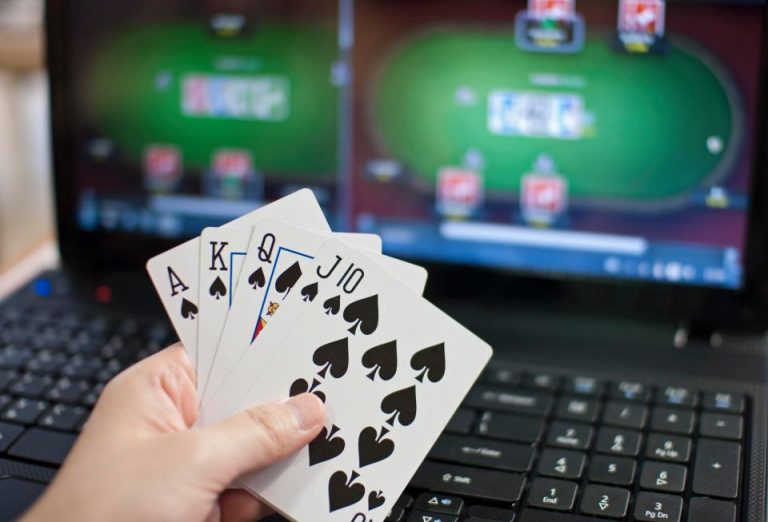
However, with the high street flagging and online exploding, it’s natural that physical shops are to close. Betting shops have already been in a steady decline since 2012. Seven years ago, there were 9,200 shops across the UK, now in 2019 there are 8,406. In that time, only Betfred have upped their street presence while Gala Coral, Ladbrokes, William Hill, and the collective rest have all lessened it.
But it’s not exactly hurting the industry. £13.9bn was the total gross gambling yield (GGY) for the 2017-2018 tax year, a near 1% increase on the year before with £4.9bn of that coming from the remote sector alone, the largest sector of all by GGY. As the online world continues to consume us ever more, that is only set to increase.
But the UK gambling industry has always been this way ever since the first UK gambling law was ratified by King Richard I in 1190 which prevented anyone but the bourgeoise from gambling. It’s always had to adapt to its environment, and in the past, it’s always done so with ease.
700 years after the initial law of 1190, the ‘The Gaming Act’ in 1845 was written into British Law, however, the piece of legislation was absolutely insane and put the punter in a sorry vulnerable state as it meant that all wagers were unenforceable by legal contract, so if the house didn’t want to pay out, they didn’t have to. But despite the risk of being burnt, this did mean that gambling in the UK was now fully legal for the first time ever which meant this once underground past time was now living above sea level bathing itself in the newly discovered sunlight.
Horse racing took off as a result, as did greyhound racing (an import from the US), along with the football pools and on-street gambling (gambling houses were quickly banned in 1853), but there was always that chance that you could be royally done over. Anyone who’s watched Peaky Blinders can attest to that.
1960 was when all that changed, with the first ever rational gambling law, The 1960 Betting and Gaming Act, which legalised betting shops and created a national institution.

Over the next 30 years the law became more and more liberalised before going full liberal in the 1990’s following the inception of the National Lottery in 1993. Twelve years later the 2005 Gambling Act came to be establishing the UK Gambling Commission and regulating remote gambling prompting new online casinos to abide by the same rules as brick and mortar casinos, but since that act, the land-based bookies have pretty much had free reign and only now is that long lead being constrained.
And no one can argue that it’s not for the better. Those of us in the gambling industry need to take more care of those most susceptible to the insidiousness of gambling. Sure, gambling can be great fun and can be a great money spinner, but we can’t ignore the facts and the damage it can cause.
The changes to the FOBTs may have been met with derision from certain quarters in the gambling industry, but we mustn’t leave our morals and our values at the door. We can’t keep chipping away at our soul just to make extra profit.
William Hill “warned” that their full-year profits would take a dip from £290m to £240m as a result of FOBTs, but gambling firms need to remember how their money is being made. It’s not from dragging people out of poverty, indeed, in some cases it’s the opposite of that.
Paddy Power conversely have taken the opposite approach to William Hill, and in good faith or not, have embraced the change saying they don’t believe they’ll have to lose any shops as a result of the FOBT change.
“Our evidence suggests a very high proportion (around 75%-90%) of customers move to other shops,” their statement read.
That positivity, no matter how naive or fanciful some of the industry may believe it to be, is what the public want to see from the gambling firms of the UK.
It’s 2019 not 1190. Punters deserve to be treated with more respect.