
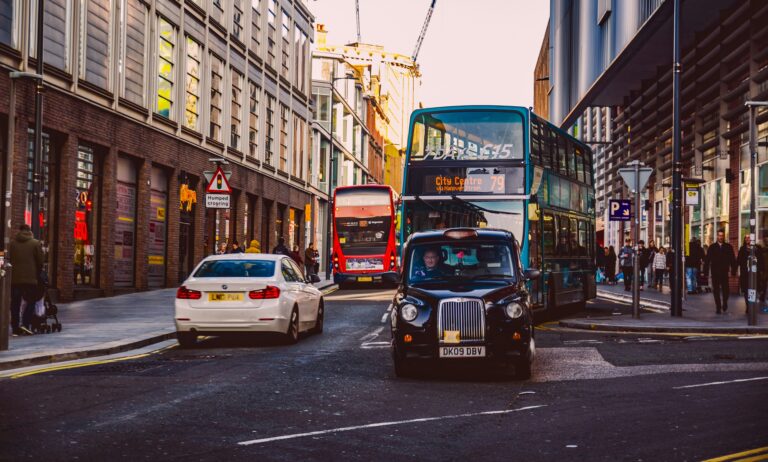
A joint effort between Liverpool and South Korea is set to go ahead, as data scientists from each region collaborate to improve transport times and interconnectivity. Together, researchers hope to make public road transport in the Liverpool City Region faster. If successful, they hope to make bus services more appealing to residents in the area.
Liverpool as a Smart City
Across the country, the largest cities are committed to becoming smart cities. This means they will implement the latest technology in the governance, maintenance and day-to-day operation of city services. As part of that, public services would gather and use data to become more efficient and affordable.
To get that data, smart cities use a lot of sensors and integrated devices that communicate with one another and broadcast information across the region. This means that the internet, specifically 5G, needs to be top-notch in smart cities, too. Of course, British cities are already committed to offering quality internet because of its importance in work and entertainment. It’s used by everybody from transport services to private businesses like retail or iGaming, where British users can play online roulette through an interactive live stream format. Smart cities take great care to improve their internet for public and private use, to support quality of life while also laying the groundwork for new initiatives like transport upgrades.
Liverpool’s Digital Twin
In their latest efforts to level up public transport, Liverpudlian data scientists will work with South Korean counterparts to construct a digital twin. This means they will create a simulated replica of the Liverpool City Region’s current bus transport system. The simulation won’t just map Liverpool’s streets but also use real-time bus location data.
Using that data, the researchers can then introduce factors like route changes or fare reductions, and model how they impact the system. This will allow them to find inefficiencies in public transport and get rid of them, possibly leading to cheaper bus fares and better service quality. According to those behind the project, they are focusing on bus travel because it makes up 82% of public transport journeys.
This new project comes after Liverpool signed a Memorandum of Understanding with Busan, the second-largest city in South Korea after Seoul. In previous visits, delegates from South Korea signed letters of intent to use data science to benefit social and economic advancements.
Speaking about this new initiative, Mayor Steve Rotheram said: “My vision has always been to provide faster, cheaper, safer and more reliable journeys for people across the Liverpool City Region.” He then added that “this collaborative new project will help us make better, data-driven decisions to help provide the world-class, London-style transport our residents deserve.”
The local University of Liverpool will also be lending its data science expertise to help the project. Speaking for the university’s Geographic Data Science Lab, Dr. Patrick Ballantyne said: “The project’s innovation lies in applying Big Data and Scenario Modelling technologies in a new area.”
If this new project yields results, its findings will be used to create similar systems beyond Liverpool. Busan will be the next city to benefit, due to their assistance in building the new digital twin system. However, after that, it’s likely that other urban areas across the UK could benefit from more efficient, data-driven transport.