
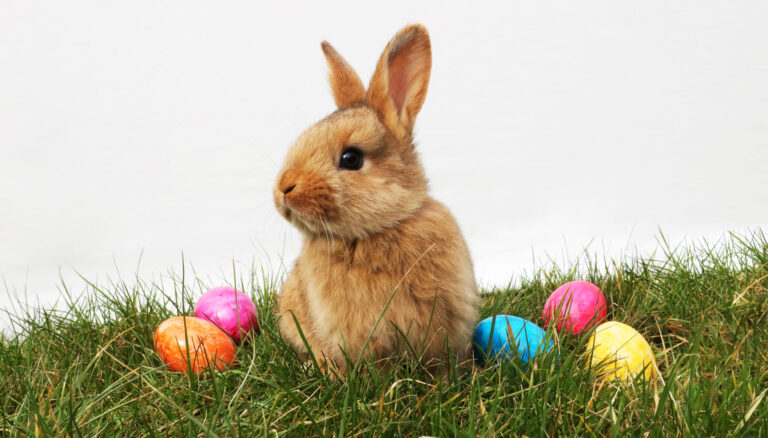
Rather like Father Christmas, the Easter Bunny is synonymous with one of our biggest Christian holidays in the UK. But have you ever thought why it’s traditionally a rabbit that delivers the eggs at Easter? It’s chickens that lay eggs, after all…
And why on earth do we eat chocolate eggs?
Before we tuck in to those delicious Easter Eggs, let’s try and clear up some of these mind-boggling questions…
The History of Easter
Let’s start at the beginning. Easter is the most important Christian festival of the year. The Bible says Jesus died on the cross on Good Friday and three days later was resurrected. This time of the year is all about the celebration of new life.
The name Easter seems to link back to Eostre, who was the English pagan goddess of dawn, spring and fertility.
Why an Easter Bunny?
Eostre was closely linked to the egg and the hare – both symbols of fertility. Already the Easter Bunny is starting to make more sense, right? The first known reference to the modern Easter Bunny we know and love appears to be in German writings back in the 1600s. The rabbit, referred to as “Oschter Haws” – or Easter Hare – laid a nest of eggs for children when they behaved. This tradition has since evolved into an Easter Bunny bringing chocolate eggs for excitable children on Easter Sunday.
So Eating Chocolate Eggs at Easter isn’t as Random as Some May Think?
Not at all. Eggs are a symbol of life and rebirth. Christians see eggs as a representation of Jesus’ resurrection – their hard shell represents the tomb and the chick inside represents Jesus. Traditionally, during Lent – the six-week period between Shrove Tuesday and Easter Sunday – Christians would not eat meat, dairy or eggs. Instead, they’d hard boil chicken eggs and save them for Easter Sunday. Fortunately for us, this tradition morphed into eating chocolate eggs as it was seen as more appealing to youngsters.
Easter around the world
But it’s not all bunny rabbits and sugar highs. Easter looks different all over the globe. Spain, for example, goes all out with a week-long celebration, complete with parades and live music. In France, it’s the “cloches volantes” who deliver the eggs. (That’s “flying bells” to you and me. The church bells head off to the Vatican to be blessed by the Pope and fly back with presents). On Easter Monday in the French town of Bessières, thousands gather to make a giant omelette (usually complete with 15,000 eggs!). In Germany they light bonfires and decorate Easter trees, while in Finland the children dress up as Easter Witches and knock on neighbours’ doors in the hope of collecting chocolate.
So, there you have it – consider yourself fully briefed on Easter. There’s not much left to do now other than eat those Easter Eggs…oh, and thank the Easter Bunny for all his hard work.