
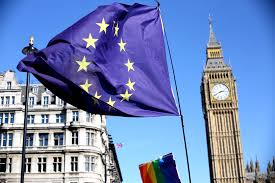
Now that the UK has formally left the European Union, how have its trading prospects with the rest of the world changed? At present, we are still in a transitional period, which will end on the 31st of January 2021, so not all the changes you might have expected to see as a result of Brexit have taken place yet. The idea of this period is to allow time for the UK to establish new arrangements with the EU trading block and pursue opportunities elsewhere. Since the trade deals we used as an EU member state will no longer apply, we need to negotiate new ones. We don’t have the same leverage that we had as part of a trading bloc, but neither are we restricted by what the 27 other nations in that block are willing to be party to.
America
Ever since the 1980s, when Margaret Thatcher and Ronald Reagan promoted the idea of the special relationship, there has been a focus on the way that shared language and traditions can facilitate smooth trading relationships between the UK and the US. Boris Johnson’s government has stressed its intention to prioritise a US trade deal, and given the size of the US economy, this is a sensible approach. Complications may emerge, however, from the modern US tendency towards isolationism and its hostility towards certain other nations. Negotiators will have to be careful to ensure that this deal doesn’t get in the way of making favourable deals with other important world players.
China
Close in size to the US economy and larger when it comes to purchasing power, the rapidly expanding Chinese economy means that a good deal with China is also of paramount importance. Whereas consumables are likely to be a major concern in a US deal, when it comes to China, materials and technology come to the fore. As any business that has recently engaged with a Chinese CRO will appreciate, the country’s pharmaceutical industry is full of potential, with new opportunities for international partnerships emerging all the time. China is also a major manufacturer of construction supplies, which could provide an important alternative to supplies from Europe.
Africa
Some of the world’s fastest growing smaller economies today are in sub-Saharan Africa, with mineral wealth powering rapid infrastructure development and a rise in the average standard of living, which in turn creates a stronger consumer base. There are lots of opportunities here for UK businesses to make connections, and the government is hoping that relationships built up within the Commonwealth will help it to secure good deals with several such countries. This will be of particular interest to exporters, companies wanting to set up low–cost overseas operations and companies with an interest in scarce commodities such as rare earth metals.
What businesses can do
Exactly what tariffs will apply on goods moving in and out of different countries still remains to be seen, but we should start to get more clarity on that in the coming months. This means that while it may be a difficult time to finalise deals, with overheads still uncertain, it’s a great time to source potential new suppliers, distributors or partners overseas. That way, when trade deals are ready to be signed, you’ll be in a position to make a move straight away, ahead of the competition. Reading up on the regulatory systems of countries you’re interested in will also enhance your ability to act quickly.
What individuals can do
The new shift away from Europe towards a more global focus means that in-demand skill sets are going to change too. It’s time to brush up on your non-European foreign languages and renew old social connections in different countries. There will be new opportunities to travel and work abroad for those who are adaptable enough to do so. If you have a particular interest in working in one region, identify which skills are in demand there and think about how you could market yourself to companies with an interest in those skills.
There are 194 countries in the world besides the UK, and over the next few months and years, the government will be seeking to establish deals with all of them. Although there are no guarantees about