
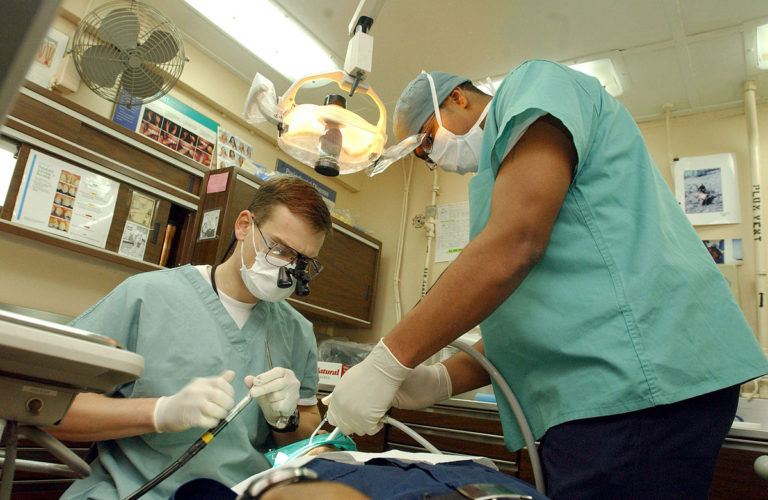
The world of dentistry has changed a lot in the last one-hundred years.
If you go back even further than that, some of the dental practices of ancient times were downright horrific! Long gone are the days of dental fillings made out of beeswax, replacement teeth from animals or even corpses, and of course, the famous ‘urine as toothpaste’ era. Thankfully, society has changed a lot since those days, and dentists have learned a thing or two in that time. Yet, it wasn’t that long ago that teeth were pulled using a mallet and a chisel! Here’s a look at the last hundred years of dentistry, so we can see how far we’ve come. From tortuous nightmare rooms of pain to the state-of-the-art and pain-free surgical labs that they are today, dentistry might have changed a little more than you think.
The Early Days
In the 1900s, society and dentistry was a little more civilised than past times. The 1800s had already brought some great advances, including the first reclining dentist’s chair, the establishment of the London Institution for Diseases of the Teeth, cocaine was first used as an anaesthetic, and 1880 even saw the founding of the British Dental Association. So, things were certainly moving forward. Despite these and several other advances worth noting (including the creation of vulcanite-based dentures and Lilian Lindsay becoming the first woman to gain a dentistry qualification), the 1900s were vastly more turbulent. This timeline will show you just how much!
1901 – It was around this year that Novocaine was first used as an anaesthetic. This was the first time that dentistry had ever been advertised as a pain-free activity. That went a long way to getting more people to visit the dental surgeon, although it still wasn’t that common an event. Around this time, despite the advances being made, street dentists were still very much active and making a living through painful and unnecessary extractions. It’s quite clear that the notion of pain-free dentistry was as appealing back then as it is now. This year also saw the awarding of the first medical degree in dentistry, which came from the University of Birmingham.
1907 – It might not have mattered as much until after World War One, but it’s worth noting that a specialist dental institute for children was opened this year. The Cambridge school was established by George Cunningham and was a huge leap forward in the public perception of dentistry. This was also the year that William Taggart designed and built a ‘lost wax’ casting machine. This would then allow dentists to (for the first time) make cast fillings that were actually precise.
1914 – During WWI, many eager young men were denied entry to the army due to the very poor condition of their teeth. This brought about a lot more interest in paying attention to your oral health. The situation was that bad that those soldiers that did get into the military were even given toothbrushes as part of their kit. This had a good knock-on effect because as those soldiers returned home, they came back with their new teeth-cleaning habits. Others, especially those that had been denied entry to fight in the war, were keen to copy. Oral hygiene was also improved at this point in time by the adding of fluoride to toothpaste. This had already been proven to help the fight against cavities and was the first big step in seeing fluoride become a major weapon in the fight against tooth decay.
1915 – Much to the relief of most people, the introduction of anaesthetic in the form of a carbon dioxide absorber was used. While numbing and pain-killing options had been used regularly, this anaesthetic changed the perception that people still had about the pain of dentistry.
1921 – By now, more had changed. In 1921, even children were being encouraged to brush their teeth (although this may have been in preparation for the next big war). However, a major change in dentistry happened this year and would transform the industry. In 1921 a law was passed that made it illegal for anyone not registered as a dentist to practice any kind of dental work. Street dentists still existed, but they were definitely on the wrong side of the law. This meant that patients were suddenly having dental experiences that were a long way from the barbaric practices of even a decade before. Even toothbrushes had changed. Throughout the 1800s, the design and materials used to make toothbrushes had evolved a number of times, and by this point the handles were made from celluloid handles rather than the animal bones that they had previously made from.
1930 – Dentistry was now changing around the world. In the USA, colleges were already teaching advanced dentistry, but in 1930 the founding of the American Board of Orthodontics became the first speciality board in the world.
1932 – By now, dentistry was starting to evolve at a more rapid pace. Dentures had already been around for a long time, but 1932 saw the use of synthetic resins being used for the bases. This made them much more durable, safer, and (more importantly) comfortable.
1938 – We’d come a long way from some of the more archaic methods of keeping your teeth clean. Toothpicks had been around since around 3000 BC, and primitive toothbrushes made from a variety of materials were standard until William Addis created the first recognised modern toothbrush in 1780. By 1938, the basic design had transformed immeasurably. This was the year that the bristles on toothbrushes were changed from pig innards and replaced with safer and more reliable nylon bristles.
1939 – Toothbrushes continued to change, and the world’s first electric toothbrush hit the market this year. The Broxodent was invented in Switzerland by Philippe-Guy Woog, and his electric design was soon being introduced to people around the world.
1943 – A huge social change occurred when women were allowed to train as dental hygienists. While this practice was limited to the Women’s Auxiliary Air Force, this led to a more widespread appreciation of oral hygiene.
1945 – This is widely considered a turning point in the oral hygiene of the world’s population. This was the year that the first public water fluoridation was started. Four US cities began adding sodium fluoride to their public water systems. Although it would take many years before this became a worldwide practice, the initial use of fluoride for the mass public started here. The UK wouldn’t create their own public water fluoridation until many years later in 1964!
1948 – This was a turbulent year for the health industry in the UK, and it’s not really a surprise just how much the introduction of the National Health Service changed the dental industry.
1950 – Fluoride continued being the main driver of dental trends, and in 1950 the world’s first fluoride-based toothpaste was released and heavily marketed to the public. It wouldn’t be long before this became standard practice for newly built toothpaste companies around the world.
1953 – One of the things that people are scared of when they visit the dentist is the sound of the drill. The American dentist Robert Nelson didn’t invent the idea of the dentist drill, but he did help to make it more popular. That’s because this renowned dentist designed and built the first water-powered turbine drill. As much as they might sound and look terrifying, this was a major step forward for oral hygiene. This design remained popular for just a few years, however.
1957 – The water-based drill of Nelson was soon outdated. The invention of a drill powered by compressed air was a game changer for many and made storage and supply of drills far easier. John Borden’s final design was quickly adopted by dentists worldwide and became a huge commercial success. Not only was this handheld piece of equipment lightweight, but it was also much easier to move around the confines of a mouth. This lead to much more intricate and detailed work being carried out. The following year (1958) saw the standardised invention of the dentist’s reclining chair, and the modern dental surgery as we know it now was clearly starting to take shape.
1960 – The 1960s might have a reputation for peace, love, and hippies, but the world of dentistry was making huge leaps too. In the US, the rise of four-handed dentistry became the norm, largely due to faster turnaround time in the dentist’s chair. This was also the decade that lasers were first used. Lasers were able to treat softer tissues, meaning that gum disease was much easier to combat.
1965 – The invention of dental sealants was another landmark in the history of dentistry, and went a long way to improving standards of dental decay. The first sealant to be commercially available to dentists was the created and marketed by Dr Michael Buonocore and DR E. I. Cueto, working off the back of Buonocore’s already established research in the field of material development in treating gum disease. It wasn’t just sealants either. Although dental implants had been used as far back as the Mayans, modern variations had so far proven to be less than ideal. 1965 saw the introduction of the first successful dental implant procedure by Dr Per-Ingvar Brånemark, and oral care was never the same again.
1968 – In the first of its kind, the British public took part in a national dental survey. This survey targeted adults only, but already showed that dental treatments and the overall state of oral hygiene had vastly improved.
1970 – The use of copper for fillings had been widespread, but the 70s saw huge advances. New materials were created that lasted longer and were far stronger. Already, patients were benefiting from the need to maintain constant dental appointments. There were some missteps. The use of mercury in some fillings had the inevitable negative effects! This was also the decade that saw medical professionals become far more knowledgeable about the ease of infection spreading in medical environments. An American doctor called James Joseph Crawford finished his study on the spreading of infections, and highlighted the dangers of spreading disease in the dental surgery.
1971 – Reflecting the way that modern dentistry works, the onus in dental care shifted in 1971 to a more preventative operation. Largely, this was due to the forming of the British Dental Health Foundation. This charity was led by a team who believed that prevention was better than cure, and that attitude continues to this day. Modern day dental companies and their suppliers have a firm focus on patient care, but this was a relatively new attitude in the early 70s.
The 1980s – Many tech advances pushed dentistry towards the more kind and caring environment that is more recognisable today. Change became much more rapid, and the first hints of what computers could do to the field were starting to be felt. However, perhaps the biggest change to dentistry in the 80s was the adoption of CEREC crowns. These were absolutely transformative, and are still being used today. Rather than crowns being painful and traumatising to install, CEREC crowns were (and remain) largely painless. They are also a much faster procedure, and modern dentists are able to do much of the work themselves. Whereas older crown types had to be sent off to specialists in order to be made, CEREC crowns could be made quickly and efficiently in-house, and that had a drastic effect on patient treatment time.
The 1990s – Dentistry still had some way to go before evolving to become the care-focused, patient-sensitive environments that they are now. The 90s saw changes continue to come, and as a result, the UK saw the formation of the Family Health Services Authority. This focus on oral health saw more people than ever before looking for ways to get a nicer smile without the pain of a dental visit. Computers were starting to be used widely, and technologies combined with much better data analysis saw patients starting to have a much more pleasant time in the dentist’s chair.
This decade also saw the introduction of superior nitrile gloves for patient examinations. The technology provided a breathable but waterproof and hygienic solution to prevent the spread of infection while being convenient and comfortable for dentists. Nitrile gloves represented a significant improvement in the underlying technology used previously, particularly over plastic gloves.
The 2000s – In the modern age, dentistry continues to evolve. Modern technologies have seen huge advances in every area of dentistry. Computer technology continues to play a major role in dentistry, and more cutting-edge tech is also starting to have a noticeable presence in the dentist’s surgery. It is also now easier than ever for you to find the most suited products for your dental practice. You can turn to trusted dental companies such as Kent Express; with decades in the industry, reliability and experience is guaranteed, with a customer care team on hand to help you source the latest cutting-edge products to provide to your patients, including filling materials and whitening treatments. Artificial Intelligence, modern anaesthesia, big data analysis, and even smartphones are also all playing a part in keeping the teeth of the world looking and feeling as perfect as possible.
The future – While it’s almost impossible to know what the next big change in dentistry is going to be, there are some intriguing possibilities. Tech such as nanobots could be the key to a brighter future for patients, or it could be Virtual Reality or AI. Whatever comes next, it’s nice to know that we’ve come such a long way in just over a century. What the next century brings is unknown, but with patient care the priority, the fact is that there might not be a reason to fear the dentist ever again.