
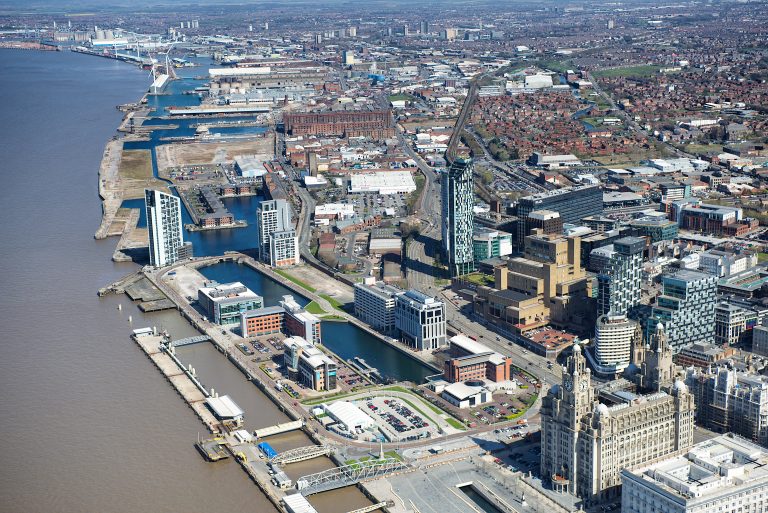
Liverpool has been recognised by Arcadis as one of four urban growth success stories in the UK. The research firm considered cities that have much to offer within their business environment, the branding for the city itself, the state of their infrastructure, workforce ability, and the available housing.
Liverpool Metro Mayor Not Surprised
The report was welcomed by City Region Metro Mayor, Steve Rotheram, however, he was at pains to point out that it didn’t come as a surprise to him that Liverpool has much to offer. For UK and foreign investors, looking for a place to invest their money that has “long-term prosperity”, according to Arcadis UK Cities’ Peter Hogg, there’s considerable expansion prospects both in the city centre and surrounding areas near Liverpool too. And its reputation as an excellent place to do business is not restricted to its football club!
Post-Brexit Opportunities
Post-Brexit, the Metro Mayor sees further opportunities rather than the pervading sense of foreboding that people feel in many other parts of the country. Devolution swings both ways. However, when using the areas that are working well recently highlighted in the Arcadis’ report, the growth potential of the city and outer areas is just the beginning.
Not only is it a good idea to target growth by doing more of what is already successful, but addressing areas where things are less than stellar is a solid way to proceed too. There’s no point sailing full steam ahead if you’re taking on so much water that you’re going to sink 3 miles out.
Taking our cue from the report, both web design and branding are something that not every Liverpudlian business is currently doing right. There’s certainly considerable room for improvement as we cover in more detail below.
The Need to Modernised Web Design
With a highly modernised city, there’s a need to have a website that thoroughly reflects that modern feel. It’s no good having a business with a 5- year old website that has a copyright date back in 2013. It only serves to make the company itself look out of touch and places a question mark in people’s minds whether the business is even still operating due to the lack of site updates or a new design. The lost sales due to fewer contacts received from customers and reduced buyer interest shown is incalculable.
Web Design – First, Understand Your Customer
Whether a visitor is a previous customer, an existing customer or a likely prospect, the design of a website must appeal to the right audience. The objective of proficient web design is not to create flashy designs that impress other designers and lose the interest of the core audience. Instead, designers must come together with the client to focus a design idea based on the industry, the types of products sold, and a persona of a typical customer. A modern-looking website with sophisticated imagery that sells tools to blue-collar workers misses the point entirely; to feel comfortable buying tools from a website, blue-collar buyers must feel comfortable. A look that’s rougher around the edges is a good thing in that instance.
How other companies in the same industry represent their business is interesting to review. Which sites are the most successful and what’s their web presence like? Do the largest local or national companies rank the highest for relevant searches in Google.co.uk? Or have the most respected brands, not necessarily the biggest ones, taken the lead? A web design and build by iProgress in Liverpool is worth considering for a suitable design to match your customer base.
Website Branding
The website branding is very important. Whatever the message or story behind your brand, this must be conveyed through your website. Everything from the logo to the overall design and through to the emotions created when first visiting the site, it all matters.
Is the website branding with the website consistent with the branding with advertising in published media or online? Is one team responsible for online advertising and another responsible for offline advertising leading to a total disconnect? Or, is no one in charge of branding at all? Is there an employee who has overall responsibility for protecting the brand or is that the PR department’s responsibility alone?
To make it clear, the key takeaway with website brand is – it must be consistent with offline branding. Customers don’t want to see an inconsistent message. If there is a current disconnect somewhere with design, a redesign or relaunched website must address that in totality.
Social Media Visual Branding
Social media is another animal entirely. With that said, branding on social media channels must both be consistent with other places where the brand is used, but also be tweaked to reflect the tastes of that social network. For instance, on a social network like Pinterest which has a largely female-oriented audience that focuses on long-form photos and images, plus video, the representation of an overly male-oriented brand or product is unlikely to gain any traction.
To be successful with social media branding for a company, it must straddle the lines between appropriateness for the brand and what will be popular on that network. Doing so without compromising the integrity of either is like threading the needle at times, but it must be done. Think about the Time Warner logo morphing into something else at the start of a film to merge the traditional TW logo with the expectations of the audience and you have the right idea.
Innovating Sooner and Faster
Once caught up with modern web design and a social media presence that works with the times, then the business needs to schedule updates. This can either be performed by themselves or contracting out to a web design studio. A redesign of the website should be completed no less frequently than every two years even for a slow-moving industry. There’s always improvements to be made and new features to add after that timeframe. For fast-moving industries, the need to update every year is clear to avoid looking out of touch with the times.
Updating a site more frequently than once a year is usually unnecessary. It will tempt web designers to make changes for change sake or to utilise bleeding edge technologies on the website that will only be accessible to a small percentage of visitors. The uses of these newer technologies may also cause complications for other visitors. Technology should be proven out before applying it to a website that’s needs to work without major complications.
The Future Isn’t Written Yet
For Liverpool to fulfil it’s promise as an urban success story, it relies on the key decisionmakers making the right calls, no one dragging their feet, and everyone pulling together. The city’s businesses can collectively offer a powerful reminder of their usefulness and professionalism to customers in the UK and abroad. Doing so will encourage more referrals which promotes further growth. However, ultimately, it’s up to individual business leaders to do the right things at the right time to get the best results.
From the Managing Director to the teams operating within each business in Liverpool, when companies work as well-oiled machines, then progress is made. When they stop and stutter and make too many mistakes, reputation suffers and the city’s reputation as an up and coming centre for modern business will come under threat.