
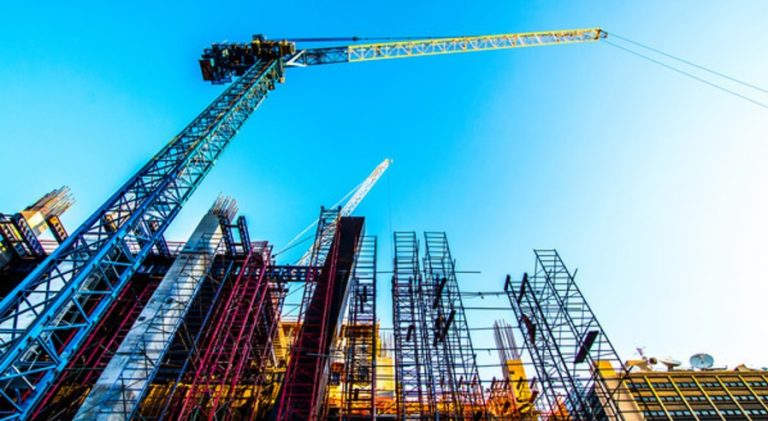
On any construction project, managing health and safety to the highest possible standard should be of paramount concern.
The best way to do this is to put the matter of safety at the heart of the project from day one. It is not an add-on but should be a core feature for clients, contractors, designers, site managers and everyone else working on the project.
Legally, the matter of health and safety in construction is primarily dealt with by two key pieces of legislation. These are the Health and Safety at Work etc. Act 1974 and the Construction (Design and Management) Regulations 2015, which supersede all similarly named previous regulations. There is also a host of acts and legal regulations covering specific matters such as noise in the workplace, gas fitting, hazardous substances and so on. As an employer, it is your duty to be aware of these regulations and to ensure that you comply with them by following best practise.
It’s worth noting, however, that responsibility for health and safety on site doesn’t begin and end with the employer. Every person involved, including the site manager or foreman and all the individual workers need to be fully aware of all health and safety issues, and do their best at all times to minimise risk and to follow best practise where their own and others’ safety is concerned.
Risk assessment
The first step to take is a full risk assessment of the site. If you employ five or more people, it is a legal requirement to provide a written risk assessment document. Take a walk around and make a note of potential hazards. If work has already begun, consult workers as to what they consider the main hazards of their job to be, and how they think these could be reduced or prevented.
Having identified specific health and safety hazards and considered how serious each one is, you now need to put together an overall strategy for managing the level of risk onsite. This means minimising risks as much as possible before work starts, either by removing them altogether or putting procedures in place to control them. Ensure all workers and staff members are properly trained and aware.
Once work begins, health and safety measures need to be continually monitored for effectiveness, and correctly maintained. The site should be supervised to make sure that workers are following correct health and safety procedures at all times and that members of the public are not being placed at risk.
Common hazards
Common health hazards on site include noise, vibration, lifting and carrying, hazardous substances and working at height or with dangerous equipment. If excessive noise is unavoidable, then ear protectors should be worn to protect hearing from permanent damage. Vibrations from power tools can also cause permanent harm, known as hand-arm vibration syndrome; symptoms include ‘vibration white finger’.
Manual handling of excessive weights or without proper training can lead to back injury, sprains, strains or permanent musculoskeletal disorders. Repetitive work in awkward postures can also have long-lasting, damaging effects.
Hazardous substances can include asbestos and silica, both of which are linked to cancer. Construction dust can damage the lungs, while cement, concrete and mortar can cause skin problems in the form of dermatitis or burns. Lead presents a serious health risk if swallowed or if fumes are inhaled, while paints, thinners, resins and glues can contain dangerous solvents and isocyanates, which present a risk of asthma and dermatitis.
Protective clothing
Clothing should protect against hazards on site. Skin should be kept covered against cuts, grazes and splinters, as well as ultra violet light and sparks from arc welding. Bright sunshine can cause skin cancer in construction workers; the number of cases has risen dramatically in the last few years. Keeping warm in cold weather is important, especially when working at height, where colder air can impair concentration.
On most construction sites, suitable protective headgear is legally required. Sites should also be organised to minimise the risk of injury, for instance, by providing scaffolding with toe boards and brick guards to minimise danger from falling objects. Quality hard hats in good condition should be provided, as well as ear protectors, if needed. It’s up to employers to make the wearing of appropriate safety equipment a site rule, and to set an example as well as making sure the rules are observed. Turban-wearing Sikhs are, however, not legally required to wear a safety helmet. Protective footwear should also be provided by the employer, with steel toecaps to protect against dropped objects and mid-sole protection against stepping on sharp objects, such as nails. Safety footwear should be ‘CE’ marked and should comply with current personal protective equipment regulations.
Employers should also provide high-visibility clothing, if applicable. Some situations will require a higher level of visibility than others, for instance, temporary traffic management workers dealing with public vehicles, who should wear long-sleeved, high visibility jackets and trousers.
Safe buildings
Construction safety doesn’t stop once construction is finished, however. Designers and contractors are also responsible for ensuring the building is fit for purpose and that its eventual occupants are safe and not at risk. This can be achieved by using suitable materials that are fire resistant and of high quality, and will not cause risk of illness (for instance, asbestos). Using reinforced glass from wholesaleglasscompany.co.uk in shop windows is another example of how a bit of extra planning can make a building safer and more secure.
Whether working on housing projects, schools or business premises, buildings should be designed and constructed according to strict health and safety requirements. This means accessible fire exits, shatterproof glass in windows, proper ventilation and minimal trip hazards. New buildings should also be fully accessible to all, including those with physical disabilities, and safe for them to use and negotiate.
Health and safety in construction is largely a matter of common sense, awareness and intention. If health and safety best practise is seen as non-negotiable, and not something that can be fudged in order to cut costs or get the job done faster, then it can be achieved.