
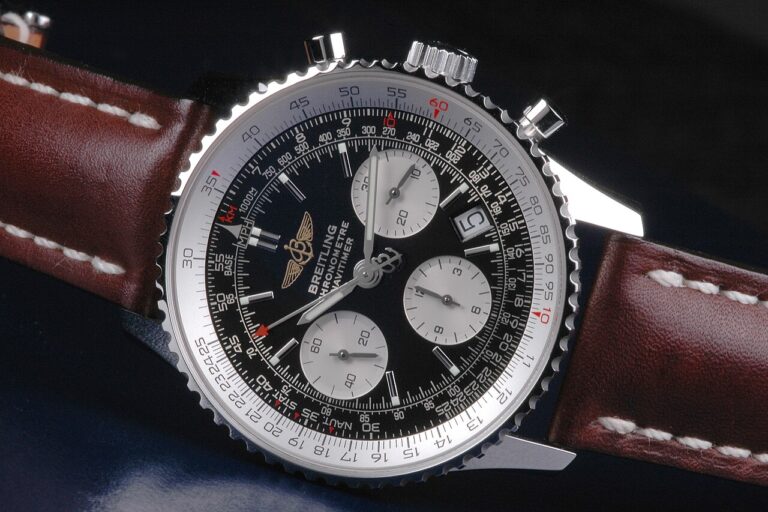
If you want to keep an existing Breitling clasp, confirm the clasp requirements before choosing a replacement strap. The width at the watch end is only part of the fitting. The clasp end, strap thickness and way the fastening holds the material also need to be suitable. Start by identifying what you already have. A pin buckle and a folding clasp ask different things of a strap, and the brand name alone cannot establish compatibility.
Identify the Fastening You Want to Keep
Remove the watch from your wrist and inspect the fastening without dismantling it. Note whether it is a conventional buckle with a tongue or a folding mechanism. Record any visible reference information, and take clear photographs of the connection to the current strap.
Those photographs are useful when asking a retailer or watchmaker about a replacement. Include the underside as well as the top, because the way the strap attaches may be clearer underneath.
Check the condition of the clasp too. If it does not close reliably or has a damaged component, deal with that before arranging a new strap around it. A fresh strap will not correct a fastening fault.
If the existing arrangement is comfortable, note where the clasp sits on your wrist. Keeping that information helps you explain what you want to preserve when comparing replacement lengths.
Separate the Two Width Measurements
A strap can have one width at the watch and a narrower width at the buckle. For example, a 22mm watch-end width and an 18mm buckle-end width describe two different connections. These figures are an illustration, not a size recommendation for any particular Breitling.
When comparing Breitling Watch Straps at Watch Obsession, check the individual product information for the intended fastening. The collection includes styles for pin buckles and deployment clasps, so selection needs to go beyond colour and lug width.
Confirm what each listed dimension refers to. Two straps with the same watch-end measurement may taper to different widths. That difference can determine whether the fastening you want to keep is usable.
Do not squeeze an oversized strap into a clasp or trim the edges to make it fit. Ask for a confirmed compatible option if the measurements do not match the requirements.
Check Construction as Well as Size
Matching width does not settle every clasp fitting. Thickness and the shape of the strap ends may also affect how the fastening holds and closes. A strap described for a pin buckle should not automatically be treated as suitable for a folding clasp.
Look for a clear statement of compatibility, or ask the seller to confirm the intended arrangement. General terms such as deployment or deployant identify a category of fastening but do not guarantee that two products work together.
If the current strap has an unusual attachment detail, photograph it before removal. A watchmaker can explain whether the replacement needs the same construction or whether a different complete fastening arrangement is more appropriate.
Keep any compatibility advice with the product details. This gives you a useful record when the strap eventually needs replacing again, particularly if the clasp is retained over several strap changes.
Consider Where the Clasp Will Sit
Strap length affects more than whether the watch reaches around your wrist. With a folding clasp, the lengths of the individual pieces can influence where the mechanism rests. A total length alone may not describe the fit you are trying to recreate.
Measure or record the existing pieces using the seller’s stated method. Explain whether the current clasp sits comfortably or presses against one side of your wrist. That is more useful than asking only for a standard-size replacement.
If you are changing from a pin buckle to a folding clasp at the same time, treat it as a new fit decision. The arrangement may feel different even where the overall strap length seems familiar.
Where possible, try the proposed configuration before committing to regular wear. Check how the clasp closes, how the watch sits and whether the fastening creates pressure when your wrist bends.
Arrange Fitting With the Right Information
Bring the watch, existing strap and clasp together if a jeweller or watchmaker is carrying out the change. Include the replacement product information and any compatibility confirmation. This allows the fitter to assess the whole arrangement.
Retain the removed fittings unless the professional explains that they need replacing. Store spare parts securely and keep them labelled for the watch. Do not assume that similar-looking pins or bars are interchangeable.
Before wearing the watch, have the attachment and fastening checked. The clasp should operate correctly, and the strap must be securely connected at both the watch and fastening ends. If anything feels uncertain, resolve it before use.
Once the fit is confirmed, save the successful strap dimensions and clasp details. Your next replacement search can then begin with known requirements, leaving you free to concentrate on the leather, colour and finish you want.